Friday
May112012

Hunting Microbes for the Glory of God

One thing I wanted to highlight but didn’t have enough room for in my last entry was a list of questions Dr. Winter posed at the end of his editorial. You’ll recall that his editorial suggested the basic idea of destructive intelligent design and proved to be rather controversial.

Here are his questions:

  • Are Evangelicals today too “spiritual” to fight this kind of evil [harmful microbes] at this level? Who knows? Probably quite a few individuals here and there are actually involved. But I don’t read about them.
  • Are pastors recruiting young people for this kind of a mission?
  • Does the National Association of Evangelicals include a division that helps coordinate Evangelical efforts in this sphere?
  • Do our Christian colleges and seminaries fight malevolent microbes?
  • Is there room for a Christian organization that will galvanize efforts to fight evil at tiny levels?
  • Please tell me if there is anyone reading this who knows of an association of microbe hunters or cell-level researchers who, under God, are at those levels straining to beat back the ingenious evil of the Evil One. I will gladly highlight such activity in these pages and try to reinforce those efforts. In fact, to highlight the crucial need for that kind of mission may be one reason my wife, specifically, has a very resistant form of cancer.

Compare these questions to a statement he made just two years later, two years of diligent, tireless searching:

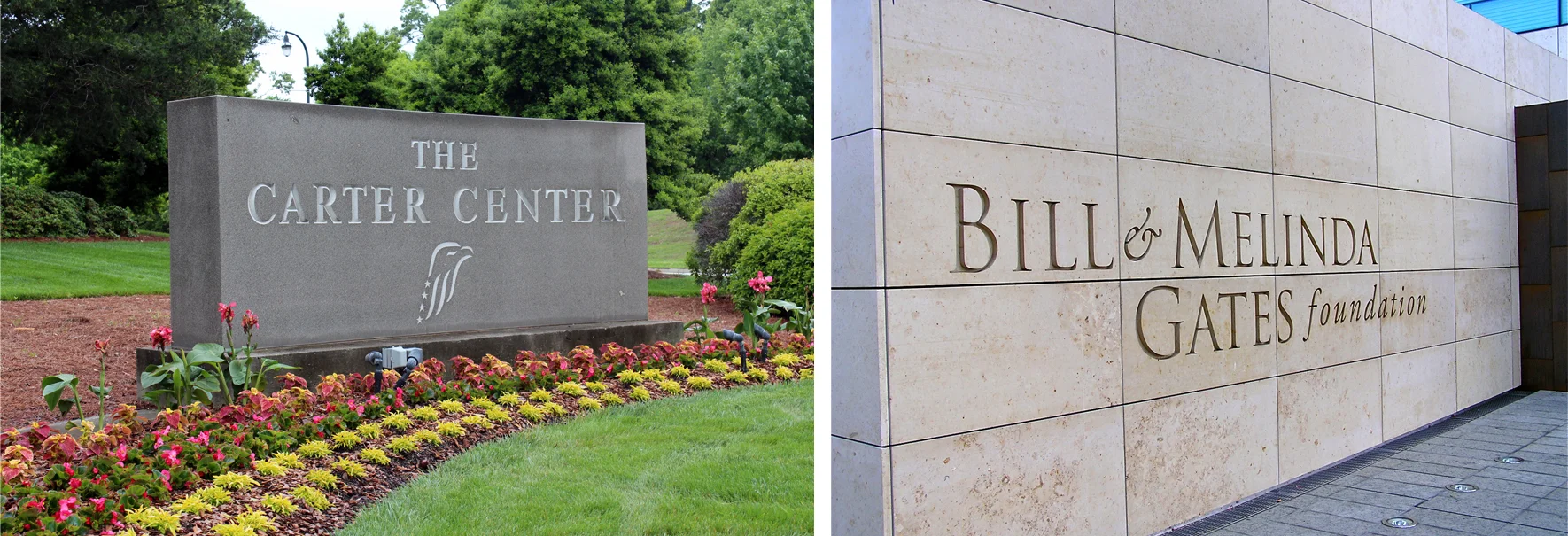
There is absolutely no evidence I know of in all the world of any theologically driven interest in combating disease at its origins. I have not found any work of theology, any chapter, any paragraph, nor to my knowledge any sermon urging us—whether in the pew or in professional missions—to go to battle against the many disease pathogens we now know to be eradicable. Jimmy Carter, our former president, is the only Christian leader I know of who has set out (in his phrase) “to wipe Guinea worm from the face of the earth.” Note that his insight did not come from a seminary experience but, perhaps, from being a Sunday school teacher.

Even until his death in 2009 Dr. Winter kept searching for this evidence. Though he found a handful of very admirable non-Christian examples such as the Bill and Melinda Gates Foundation, he did not find even one substantial endeavor that was initiated for the glory of God. This is the niche the RWI hopes believers will populate and the motivation behind our mission.

Do you know of any significant work being done in the area of disease eradication for the glory of God?  Please contact us.


Thursday
May102012

Destructive Intelligent Design

Here I share with you a very controversial portion of an editorial column Dr. Winter wrote for Mission Frontiers magazine in July 1997. In addition to being controversial, this may have been the very first time he publicly elucidated his growing concern about disease and who deserves the blame for it.

He starts by recognizing the validity of intelligent design, citing Michael Behe’s courage in writing Darwin’s Black Box, which was published only a year earlier.  After assuming that Behe would say that our immune cells are intelligently designed for good, he dares to wonder, “Isn’t it equally possible, then, that we can observe that, say, the tuberculosis bacillus is intelligently EVIL?” He then asks, “Who would design something like [the tuberculosis bacterium]? Not God!”

This material immediately aroused the concern of many readers. One prominent pastor, a close and longtime friend of Dr. Winter, wrote him in a state of shock, wondering how Dr. Winter could lean towards such a simplistic and profoundly unbiblical solution to the problem of evil.

This same pastor writes quite eloquently a long list of scripture passages that oppose Dr. Winter’s conjectures.

In questioning Dr. Winter’s inference that God did not design destructive microbes he offers Mt 10:29, “Not one bird falls to the ground apart from the will of your Father.”

He counters Dr. Winter’s conclusion that God could not be the one behind a third of the world having tuberculosis with Rev 9:15 which describes four angels who are kept ready for a specific moment when they will kill a third of mankind.

His most compelling opposition to Dr. Winter’s line of thinking is built on Rom. 8:20, “For the creation was subjected to frustration, not by its own choice, but by the will of the one who subjected it, in hope...” He explains that our world with all of its suffering and natural disasters has been subjected to futility not of its own will, not of Satan’s will, but on account of the one who subjected it IN HOPE. “This,” he explains, “can only be God.”

He finishes his letter with warm regard for Ralph and Roberta, but appeals to God’s complexity in commanding Moses to tell Pharaoh to let the people go and then simultaneously hardening Pharaoh’s heart.

I recently found a short reply written by Dr. Winter. Rather than respond to his friend’s theological concerns, he thanks his friend for the thoughtful letter and says, “I think what I am saying does not really disagree with the force of your emphasis.” Dr. Winter agrees that God is ultimately in control and the only true God. But adds, “the demons in the New Testament throwing children into the fire (Mk 9:22) are not puppets where God holds the strings. Satan does. Isn’t that right?”

He ends his response by saying that he will write a decent respectful letter but is waiting until his pastor friend can read his next editorial which carries the same argument further.

I’ll post that editorial tomorrow.

Friday
May042012

Six Basic Activities in our War against Satan

Dr. Winter once wrote about three kinds of essential effort in a real war:

Defensive:

1. Treat the wounded 
2. Avoid bullets, bombs

Offensive:

3. Defeat the enemy

He used this analogy to explain the difference between healing (treat the wounded), prevention (dodging bullets) and eradication (defeating the enemy). “All of these are important,” he explained, “but the third is the most urgent and crucial. You can fumble the ball in treating the wounded and dodging bullets, but you can’t win the war without the offensive.”

Not long ago I realized that these three activities are the essential efforts in winning a battle, not a war.  In a war, the list of necessary efforts expands to at least six.

Six Basic Activities in War

  1. Recruiting—can’t fight a war without troops
  2. Training
    • How to survive in battle (dodge bombs and bullets)
    • How to maintain order and morale in the midst of battle
    • How to do battle (shoot and bomb the enemy)
  3. Medical Corps—every military must have trained medics attending to the needs of soldiers
  4. Reconnaissance—the military leaders need to know the enemy’s composition and capabilities before any battle
  5. Strategy—how, when and where to deploy the troops
  6. Battle


While Dr. Winter’s initial list provides a helpful analogy to describe our battle against disease, I think this list provides a pattern to follow in our war against evil. I’ll flesh out the rough equivalents:

  1. Recruiting—Evangelism
    • Not simply reconciling estranged human beings to God, but recruiting them into a war against the powers of evil and darkness; a war in which they can expect suffering, hardship and death
  2. Training—Discipleship
    • How to dodge Satan’s flaming arrows (temptation, sickness, fear, etc)
    • How to maintain devotion to God and morale in the body of Christ in the midst of battle
    • How to fight the enemy, i.e., rather than teaching believers to passively resign themselves to the enemy’s attacks, this perspective would instill a posture of offensive resistance within every follower of Jesus
  3. Medical Corps—care for the physical, spiritual, and emotional health of each member of the body, i.e., medical practitioners, pastoral counselors, healing ministries, member care, and the like
  4. Reconnaissance—to quote Dr. Winter again, “We need to recognize and ponder more seriously the kind and degree of harm Satan is able to cause. We need to unmask the works of Satan.” This could be the result of the combined and cross-disciplinary efforts of theologians, missiologists, and scientific researchers
  5. Strategy—how, when and where to plant new churches, new relief and development projects, or new public health initiatives
  6. Battle—destroy the works of the devil 1Jn 3:8, i.e., address and attack the roots of the biggest human problems in the world: spiritual darkness, poverty, disease, illiteracy and political corruption.

The Kingdom is at war and is not merely recruiting in peacetime. In this perspective the distinction between evangelism and social action is highly artificial. But both evangelism and social concerns are misconceived if they are seen as a humanistic campaign for the betterment of the human race. They are essential features of a Kingdom at war where the very glory of God is at stake.

~Ralph D. Winter


Tuesday
May012012

Needed: A network of Christian disease eradication workers

By Brian Lowther

I’ve given a handful of lectures over the past two years. Most have been fine. Some have been great. One in particular was quite difficult on account of some unexpected cynicism from a few members of the audience. I think the thing that aroused their skepticism was when I said something to the effect of, “in all the world there is no coordinated, theologically motivated endeavor to eradicate disease.”

Three or four people in the audience spoke up with the same concern, “There are already plenty of Christians who do eradication work.”

I agreed with them. And mentioned that there are likely scores of individual believers who are at work in the World Health Organization, the Carter Center or other public health entities. “Their contributions are to be applauded,” I said, “and emulated.” But one of the great developments in Christianity over the past two centuries has been the fruitfulness of the mission agency: a concerted organization of trained people who are theologically compelled to accomplish a specific purpose. There is no equivalent to the mission agency in the world of disease eradication. Establishing such organizations could be essential to the success of eradication efforts currently underway.

This wasn't very persuasive to them. Later after my talk, the handful of folks who remained dubious met me in the back of the room to discuss a bit more. “Do you know how much money it takes to eradicate a disease?” One of them said.

I agreed with him and brought up the Rotarians. A little known fact is that Rotarians have been a big part of the Global Polio Eradication Initiative since it began in 1988. Rotary clubs have contributed huge amounts of money and volunteer hours to immunize children around the world against polio and to raise public awareness about the disease. In that time the number of polio cases worldwide has decreased by more than 99%. In spite of this remarkable progress, tackling the last 1% of polio cases has proven to be very difficult. The greatest threat to this program’s success: funding.

A few years ago Rotary International challenged its clubs to raise $200 million in three years. Amazingly, after only two years, Rotarians had raised 87% of that amount.

The Rotary Foundation raised this impressive sum by challenging each of their 34,000 clubs to raise $2,000 per year, for three years. For comparison’s sake, there are about the same number of Methodist churches in the United States and three times as many Baptist churches. The Hartford Institute for Religious Research estimates that there are roughly 335,000 religious congregations (Protestant/Catholic/Orthodox) in the United States. If each of these congregations followed the Rotarian pattern, over $2 billion would be generated in three years.

He still wasn’t persuaded. He considered it an impossible goal to get every church in America to donate money to the same cause.

We continued to discuss the topic and eventually someone suggested a reasonable first step that the whole group seemed to like: form an organization whose main goal is to connect all of the believers who already work in eradication. These eradication workers could build each other up and inspire one another to pursue the challenging questions about the roots of disease. This new organization could provide the theological motivation to this group, and help them integrate their work with their faith.

There is a similar kind of organization that does this sort of thing for doctors and dentists called the Christian Medical and Dental Association. The CMDA mainly coordinates a network of 16,000 Christian doctors and dentists for fellowship and professional growth. But it also conducts overseas medical evangelism projects, sponsors student ministries in medical and dental schools, and many other good things.

What, or more importantly, who would it take to start an organization like this? What would be appropriate goals for membership, i.e., how many believers are out there who currently work in disease eradication? If that number is relatively small, is this idea not feasible? What kind of low-risk action could we take to develop and test this idea?

I don’t know the answer to any of these questions. Do you? Feel free to leave any thoughts you have in the comments below.

Friday
Apr272012

Bob Blincoe joins the RWI Board of Reference

By Brian Lowther

One of the Roberta Winter Institute's most strategic goals is to establish a board of reference of respected individuals in the Christian community who knew Dr. Winter and his heart for the unreached peoples of the world as well as those who have an understanding of his last major initiative, that of founding the RWI.  

Bob BlincoeRecently we met with Bob Blincoe, U.S. Director of Frontiers, and I'm very happy to announce that he agreed to join our Board of Reference.

Prior to leading Frontiers, Bob led his family and a Frontiers' team to the Middle East following the Gulf War (1991). Before that, he and his wife taught English in Thailand. Bob earned a PhD in History of International Development from William Carey International University. He also earned Master of Divinity and Master of Theology degrees from Fuller Theological Seminary. Bob is an ordained Presbyterian Minister. He is the author of Ethnic Realities and the Church: Lessons from Kurdistan. He also publishes a frequent blog.

I'm personally quite excited about this development because God has used Bob to influence many people to go to the hard, unreached places.  Besides that, I just like the guy. In the brief interactions I've had with him, he seems wise, kind-hearted and humorous. 

Plus it is clear that Bob loved Dr. Winter. He gave a heartfelt address at Dr. Winter's memorial service in May 2009. In his address Bob admired Dr. Winter's prowess as a student of the Bible and a teacher of Christian history. But he was most affected by Dr. Winter's problem solving nature. He told a story of attending a lecture once where Dr. Winter began by explaining that he had some remarks prepared, but said, "If any of you have a burning question, I would like to hear it. I may not be able to help, but I do like to try and solve problems." Apparently Bob wrote this down on a card that he carries with him.

Rejoice with me over Bob's willingness to lend the credibility of his good name to our cause.